I voted.
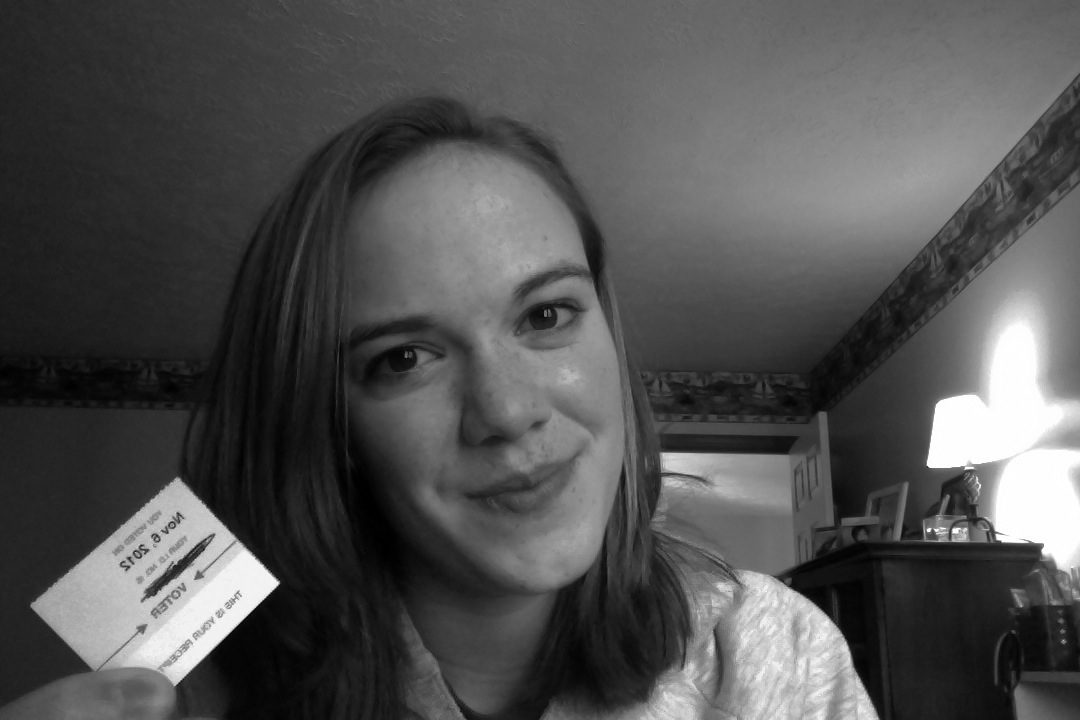
I won’t launch into a lengthy diatribe about my political beliefs, or anyone else’s. I just want to tell you that I voted on Election Day.
Yes, Election Day is old news. It’s been days, we already know the results, we’ve already determined our President for the next four years. You might be absolutely thrilled right now or you might be planning your relocation to Canada. Either way, the election has happened; the people have spoken. Hopefully.
Four years ago, I was 18 years old, a college freshman, still ignorant and naive. I registered to vote on my 18th birthday in high school because it was the cool thing to do, not because I knew anything about politics. I registered what I believed was the same party as my parents (not actually 100% sure what that party was or meant or stood for). All I knew was that I didn’t want to be an Independent because I wanted my vote to count.
And then I didn’t vote. I was going to school in a different state and the words “absentee ballot” weren’t even in my vocabulary until it was too late. Barack Obama was sworn in as President and if there were any changes to my personal circumstances, I didn’t know of them. So I was okay with whatever happened.
I’m sure I’m not the only one with a story like this. There are people everywhere who don’t vote, who don’t feel that it will make any difference, who hate the entire system so much that they think not voting will make a statement in itself…whatever the reason, I learned that there is a huge percentage of Americans who don’t vote. So I didn’t feel bad about not voting at 18. In fact, I actually felt better about my decision not to vote because I realized that an uninformed voter is not much better.
Then I took a few political science classes in school and learned a lot more about the government and elections and how that whole “system” works. I learned about political ads and strategies. I learned about the stances that each party takes on issues. I read President Obama’s book and analyzed how race and gender play into politics. I listened and participated in discussions. I saw how the news reports the same story in different ways and influences the way people think about candidates and parties. In short, I slowly became an informed citizen, an active consumer of news–and I couldn’t wait to participate.
So I voted on Tuesday. I woke up early so I could stop by the polling center before I headed to my internship. The voting booths were located in a Catholic school (which I thought was ironic, but maybe that’s just me). I must have arrived at the perfect time. I was expecting long lines, but there were only a few people ahead of me.
As I stood waiting for one person to finish up, a woman suddenly rushed over to me and wrapped me in her arms, thanking me profusely for voting. After only a second of extreme confusion, I realized it was my neighbor. She didn’t even know who I was going to vote for, she was just grateful that I was participating in our government.
When I got up to the table, I was asked for ID (also ironic, considering Pennsylvania does not require ID) and I handed them my license. I saw copies of the signatures of everyone in my family, which was weird to me. (It felt a little bit like someone was keeping tabs on me. I had never been there before and I didn’t know those people, but they had my signature just chilling in some binder?)
The women behind the table passed along the news that I was a first-time voter, like they were playing the Telephone game or something. My personal political beliefs, which may or may not have agreed with their own, didn’t stop them from being excited for me.
“First-time voter over here, Mary!”
“Oh Sharon, we have a first-time voter, make sure Janice knows.”
“Hey, can you show this first-time voter what to do?”
And so I was led to the last chest-high computer in the row and a kind, little lady showed me how to tap the screen for the candidates I wanted and hit the vote button when I was finished. She reminded me to tap “confirm” when I was finished. And after I clicked through the candidates and hit “vote” I wondered how anyone could miss the 6 inch by 6 inch “confirm” button in the center of the screen. But I guess people had.
And then it was over. I walked out of the room and back to my car, with a smile on my face and this extreme sense of pride that I had just voted for the President of the United States. I had such an easy time with it that I wondered why everyone didn’t vote. I wondered why people claimed to be too busy, or said the process was too complicated. But I saw the news that night and I saw people who waited hours in lines and had to fill out bubbles on sheets of paper, and I realized that maybe it wasn’t quite as easy for everyone.
Politics often causes such huge rifts between groups of people and communities. They like one candidate, they hate certain policies, they think they know what should be done to make America better. No one agrees on anything and we certainly can’t all agree on everything. But the one thing people should agree on is that it is important to vote. It is important to be a part of it.
I didn’t think it mattered before. I didn’t think that one person’s vote out of millions would make any difference. But a lot of people might think this way. And when we all think we’re unimportant–when we are all uninformed and apathetic–then the system won’t work.
Here in America, we have this freedom to vote. We have more than the freedom to, we have the right to. Not everyone in this world has that. I think it does matter. And now I am proud to say I voted.
 Measure with Coffee Spoons