Real World 101

2225121-business-group-meeting-portrait--five-business-people-working-together-a-diverse-work-group

Is there anyone who is truly well-prepared to enter the real world?

Take the average American, middle-class, suburban person. They have both parents (or even one parent, whatever), a few siblings, a few hundred dollars from birthdays in their savings account, and let’s take a look at a brief synopsis of their life.

This person goes to public school. They go to a middle school that is just trying to prepare them for the “much-harsher” high school. They get through high school, with the goal of getting into the best college possible. They have this notion that their SAT scores are everything. They have to become an outstanding student, take AP and honors courses and get all A’s. They have to get into National Honor Society, join clubs, be President, and run the Prom committee. All because they have to improve their personal chances of getting into the best school.

So they graduate high school. They’ve gotten into colleges and they make their choice. They decide what will be best for them. They take into consideration what they want to major in, where they want to live, whether they will play sports. They weigh the merits of each school, the pros and cons. They make the best choice to further their education. And then their last days of summer are behind them and they’re walking the campus and taking 8 AM classes.

Now, they get good grades because it will help them get a job. They are trying to improve their personal rankings in the long line of graduates seeking the exact same jobs. Again, they join clubs, they learn skills, they discover their talents. They make themselves better people, because it’s all about them. It’s about them getting somewhere. It’s about how they will live the rest of their lives.

It’s all about them.

And then they get that job. Whatever that job may be, good or bad, high-paying or minimum wage. They get it. Congrats.

And then suddenly, it’s not all about them anymore. It’s about the company. It’s about keeping the boss happy. It’s about communicating what you’re doing in your daily tasks with the other people who are doing their own daily tasks, all in the attempt to make the company or organization or business better. It’s about anticipating what others will need before they have a chance to yell at you. If the company goes bankrupt, loses money, has to lay off workers, then you are losing money and/or out of a job.

It’s not about you. At all. 

So where did we go wrong? Or maybe the question should be, why?

Why are we told from the very beginning that it’s all about us, that we are individuals and we will succeed or fail alone, if in reality, it’s about the company and the group and the collective?

If you don’t turn your homework in, you fail the class. You get a bad grade. Your GPA drops. Your class rank falls. You fail. Your poor work ethic doesn’t hurt anyone but yourself. 

But if you don’t finish the project that you’re working on at your job, if you don’t close the deal, it is the company that pays the price. The sales drop, you lose a client, you lose money. The fault might be yours, but the consequences affect the group.

How did we come up with this backwards way of teaching children and educating the young workforce? What if we had told students that if one person was failing, none of them would get an A? Don’t you think everyone would do everything they could to help that kid get his homework done? Maybe that sounds too much like socialism. People don’t like socialism. People like to know that if they do a good job personally, that they will be rewarded.

Usually that’s the way it is in the workplace. People who excel at their jobs get promoted. But you can’t excel at your job if you’re not looking at the bigger picture. If you don’t see the work that everyone else is doing and if you can’t align your needs with the needs of the organization as a whole, then your disconnected way of thinking will never get you anywhere.

Somewhere along the line, someone came up with this “me, me, me” attitude towards teaching in schools. But then kids get to their jobs in the real world and they aren’t prepared. They aren’t prepared to write someone else’s to-do lists and manage their boss’s schedules and book flights for their co-workers and file paperwork that doesn’t belong to them. It’s this whole new way of thinking. When all you have to do is worry about your own life and your own schedule, life is easy. But put the needs of ten or twenty or a hundred other people onto your to-do list and suddenly your public school, college education just went out the window, because you’ve never had to do that before and no one prepared you.

Real life isn’t sitting in class, taking notes and passing a test. So why do colleges think they are preparing us for our careers?


(photo via)
The Door Only Swings One Way– But It’s Always Open

I never expected to move back home after college. I never thought I’d be allowed back. I used to quote my parents saying, “the door only swings one way.” Lucky for me, that door swung back open after I graduated.

It took two cars to bring home the belongings I hadn’t sold. I claimed a bed, a dresser, and a room. And I found myself settling back into the old routine. But one thing was different–both my brother and sister went away to school this time.

Being the oldest, it had been easy for me to leave home and go to college. At eighteen, I was the typical high school senior who is very ready to go away. I left my younger siblings and embarked on the new life that is college. I came home for holidays and summers; and whenever I came back we were all together again. I never saw a void because it was filled with classes and swimming and new friends and jobs.

But this year, it’s the middle children who are at school, leaving my brother and me here to fight over the cereal and shower time. I didn’t know the house could even get this quiet–until both my parents are working and Josh is at school. I didn’t realize that the dog actually rotates through every couch and every bed in the house when she thinks no one is home, but the second she hears the garage  door open she’s on the floor. I didn’t realize that with multiple vehicles, figuring out where to park, or who is parked in, would be a challenge. I didn’t realize that so many shows could be recorded on a DVR. And I didn’t realize how much my little brother had grown up without me.

We have this little unspoken ritual, Josh and I. Or maybe we have many, but it’s hard to notice all of them. He is tall, so he points the shower head out farther when he takes his showers at 6:30AM. I am short(er) so every day  at 8AM I have to point the shower head back down or it will leak all over the floor. The next morning, he points it back up. He uses his sink on his side of the bathroom. I use mine. If it wasn’t my mess, it was his. It may seem silly but it’s simple, consistent.

How easy it would have been, to only have one sibling, to be a family of four. That’s what I’m thinking until Thanksgiving break rolls around and the doorbell rings and my long-lost brother and sister are back. Lindsay’s clothes are all over the floor of my room, the music on Andy’s computer is blaring, and all is now right with the world.

I hadn’t seen the void when I was at school because it was filled with so many other things. Now that I’m home, I haven’t seen the void because it’s so big I can’t even see the edges. Family is often overlooked and under-appreciated. Family is loud and annoying and messy. There’s toothpaste all over the sink and my favorite cereal is gone the day after I open it. There is never enough gas in the tanks and every mile must be accounted for so that the right person can pay their share. My favorite socks look extremely similar to someone else’s socks so that I never have the truly correct match. Someone wants to watch one show on TV but someone else is recording something and someone else wants to watch this movie and despite the fact that there is more than one TV in the house, we all want to be in the same room. If someone is saving something in the fridge for later and there isn’t a note reading “Do Not Eat” on that container of leftovers, it will be eaten. And even if there is a note, there will probably be a few bites out of it anyway. If I want to go to bed at ten I can expect to be woken up when someone gets in at 2AM. If I want to sleep in, I should be prepared to be woken at dawn. We don’t sit down for dinner all at the same time. This is family and family is messy.

But this crazy family is back together for Thanksgiving and I suddenly remember what I’ve missed. My sister’s clothes scattered on my floor remind me that we can still share some shirts, even though she’s a few inches taller. The laundry was sorted wrong because all of the kids are home and my mom isn’t sure who has what anymore. My cereal gets eaten before I get any but at least it’s not getting stale. There are too many shows that we want to watch, but at least we can all fit together on the couches. We eat someone’s leftovers and when they’re mad, at least they’re there to get mad. And when we finally all sit down together for dinner, we notice. And we love it.

This is what Thanksgiving is for–for being together and giving thanks. For realizing that you already have everything you need. I would venture to guess that the number one thing people say they are thankful for is family. Easy to say, more difficult to explain.

My little brother is growing up and I’m grateful that I moved back home to be part of that. My family has always been important, but sometimes it takes seeing the void to realize the true value.

I am still very ready to move out and live on my own. I am ready for my own independence and I would be perfectly happy doing my own laundry and eating my own leftovers. But I’m thankful for my messy family and I’m glad this door is always open.

Voting in a Nation of Opposition

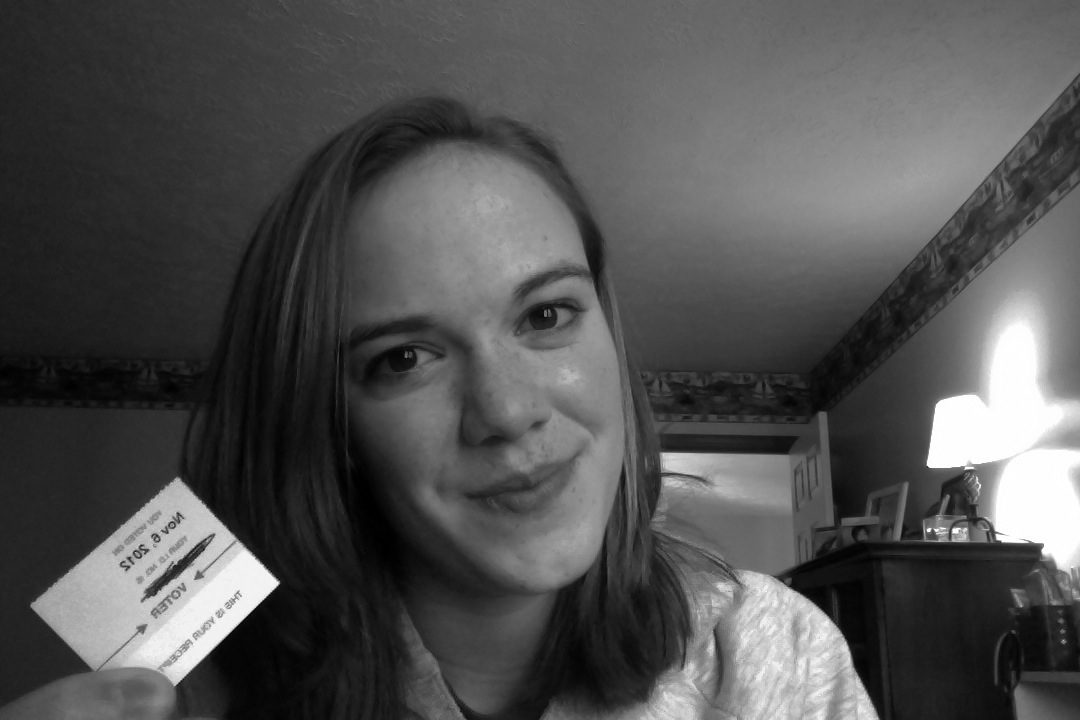
I voted.

I won’t launch into a lengthy diatribe about my political beliefs, or anyone else’s. I just want to tell you that I voted on Election Day.

Yes, Election Day is old news. It’s been days, we already know the results, we’ve already determined our President for the next four years. You might be absolutely thrilled right now or you might be planning your relocation to Canada. Either way, the election has happened; the people have spoken. Hopefully.

Four years ago, I was 18 years old, a college freshman, still ignorant and naive. I registered to vote on my 18th birthday in high school because it was the cool thing to do, not because I knew anything about politics. I registered what I believed was the same party as my parents (not actually 100% sure what that party was or meant or stood for). All I knew was that I didn’t want to be an Independent because I wanted my vote to count.

And then I didn’t vote. I was going to school in a different state and the words “absentee ballot” weren’t even in my vocabulary until it was too late. Barack Obama was sworn in as President and if there were any changes to my personal circumstances, I didn’t know of them. So I was okay with whatever happened.

I’m sure I’m not the only one with a story like this. There are people everywhere who don’t vote, who don’t feel that it will make any difference, who hate the entire system so much that they think not voting will make a statement in itself…whatever the reason, I learned that there is a huge percentage of Americans who don’t vote. So I didn’t feel bad about not voting at 18. In fact, I actually felt better about my decision not to vote because I realized that an uninformed voter is not much better.

Then I took a few political science classes in school and learned a lot more about the government and elections and how that whole “system” works. I learned about political ads and strategies. I learned about the stances that each party takes on issues. I read President Obama’s book and analyzed how race and gender play into politics. I listened and participated in discussions. I saw how the news reports the same story in different ways and influences the way people think about candidates and parties. In short, I slowly became an informed citizen, an active consumer of news–and I couldn’t wait to participate.

So I voted on Tuesday. I woke up early so I could stop by the polling center before I headed to my internship. The voting booths were located in a Catholic school (which I thought was ironic, but maybe that’s just me). I must have arrived at the perfect time. I was expecting long lines, but there were only a few people ahead of me.

As I stood waiting for one person to finish up, a woman suddenly rushed over to me and wrapped me in her arms, thanking me profusely for voting. After only a second of extreme confusion, I realized it was my neighbor. She didn’t even know who I was going to vote for, she was just grateful that I was participating in our government.

When I got up to the table, I was asked for ID (also ironic, considering Pennsylvania does not require ID) and I handed them my license. I saw copies of the signatures of everyone in my family, which was weird to me.  (It felt a little bit like someone was keeping tabs on me. I had never been there before and I didn’t know those people, but they had my signature just chilling in some binder?)

The women behind the table passed along the news that I was a first-time voter, like they were playing the Telephone game or something. My personal political beliefs, which may or may not have agreed with their own, didn’t stop them from being excited for me.

“First-time voter over here, Mary!”

“Oh Sharon, we have a first-time voter, make sure Janice knows.”

“Hey, can you show this first-time voter what to do?”

And so I was led to the last chest-high computer in the row and a kind, little lady showed me how to tap the screen for the candidates I wanted and hit the vote button when I was finished. She reminded me to tap “confirm” when I was finished.  And after I clicked through the candidates and hit “vote” I wondered how anyone could miss the 6 inch by 6 inch “confirm” button in the center of the screen. But I guess people had.

And then it was over. I walked out of the room and back to my car, with a smile on my face and this extreme sense of pride that I had just voted for the President of the United States. I had such an easy time with it that I wondered why everyone didn’t vote. I wondered why people claimed to be too busy, or said the process was too complicated. But I saw the news that night and I saw people who waited hours in lines and had to fill out bubbles on sheets of paper, and I realized that maybe it wasn’t quite as easy for everyone.

Politics often causes such huge rifts between groups of people and communities. They like one candidate, they hate certain policies, they think they know what should be done to make America better. No one agrees on anything and we certainly can’t all agree on everything. But the one thing people should agree on is that it is important to vote. It is important to be a part of it.

I didn’t think it mattered before. I didn’t think that one person’s vote out of millions would make any difference. But a lot of people might think this way. And when we all think we’re unimportant–when we are all uninformed and apathetic–then the system won’t work.

Here in America, we have this freedom to vote. We have more than the freedom to, we have the right to. Not everyone in this world has that. I think it does matter. And now I am proud to say I voted.

My name is Meg and I’ll be your server this evening…

It’s the job you get during college, to make money for weekend fun and to stock up on Easy Mac. It’s the job you get because your parents want you out of the house during the summer. It’s the job you get because you spent all your money on weekend fun and now real life is glaring right in front of you after graduation. And then it’s the job you get because the real job seems to be eluding you, the unemployment rate is rising ever higher and you can’t stand one more day in your parents’ house.

Waitress. Server. Restaurant work. Busboy. Server’s assistant. Runner. Cook. Dishwasher. Whatever you want to call it. You’re working in a restaurant because it’s probably the one job where the unemployment rate is practically 0%. Restaurants are constantly turning over employees, whether they lose them to high school or college, or people leave for their real jobs, or they show up late and hungover one too many times. And if one certain restaurant doesn’t seem to be having any of those problems then there are a hundred others within a 20 minute radius of your house that would take you.

Restaurant work is not very difficult. It’s repetitive. Table sits. Greet, drinks, take orders, serve food, refill drinks, offer dessert, check. Goodbye, next table please.

It’s all about what you do to earn that tip. You have to be pleasant, smile, leave your emotions at the door. Forget about the fight you had with your parents, forget about the fact that your girlfriend hasn’t texted you all day–any little sign you show of not wanting to be waiting on that table lowers your tip a little more. Be funny. Tell a little joke that will make the people at your table laugh and distract them from the fight they are having with their spouse. Don’t check on them too often and certainly don’t forget about them. Make them feel like they are the only table you have, even if you are running around like a crazy person and sweat is glistening on your forehead. Just try to wipe the sweat away before you ask them if they are enjoying their meal.

If the people at your table are just not having any of it–the food is wrong no matter how it’s cooked, your service is terrible even though you’ve done nothing wrong, the check is too high even though you rang everything in correctly–then you force that smile to your ears as you say, “Thank you for dining with us today and please have a wonderful evening.” And don’t let them see you slam the kitchen door behind you in utter exasperation.

These are some of the things I’ve learned through working in a few different restaurants. I’m sure other servers will tell you the same thing. Restaurant work is not much different, no matter where you are. Some tables are great and others are frustrating, needy, complaining, and don’t leave good tips. In fact, if you watch the movie Waitingyou’ll get a good idea of what it’s like to be a server (with about 92% accuracy, minus the spitting). But  you might actually have to be a server to think it’s funny.

I started waiting tables in college, after I stopped swimming. I suddenly had an extra 20+ hours of time on my hands and I realized I was out of money. Miraculously, a restaurant that was just an eight minute walk from my house hired me as a server, knowing that the only work experience I’d ever had involved swimsuits and lane lines. But they trained me well, taught me the ten core values, drilled the mission statement into my head and gave me a huge written test involving every topping, dressing, and vegetable in the house. And I had “earned my kilt.” (It was an Irish restaurant and our uniform included a mini-kilt.) I became a great server and I loved the people I worked with. I hated 35 cent wing night, $5 burgers and selling shots, but I made enough money to get me through my senior year.

Last summer, I worked at a small bar and grille that might be considered a step down from the college bar. I got two days of training and then they shoved me at a table, where I proceeded to screw everything up because they hadn’t bothered to let me learn the menu. I hated the people I worked with and hated the hours. But hey, they let me read my book in front of customers when I was bored, so I didn’t complain–much.

And now I’m making a huge step up, I believe. I’m currently waiting–both on real-world jobs and on tables. The restaurant is nicer than one I could afford for dinner and so far, the people I’m working with are great. They trained me well, and it was easier to pick up since I’d already been well-trained before. I made a few flash cards to learn the menu and the manager validated me with confidence.

Those early lessons I learned from my first restaurant at college will always get me through the rough shifts. No one taught them to me, they were lessons that could only truly be learned from experience. “Please” and “Thank you” go a long way– with customers, managers, fellow servers, and cooks and dishwashers. Help bus tables, even if it’s not your table or your job–someone will help you later on when you need it. If you’re not sure about an entree or an ingredient or how to ring something in, ask. It’s worse to completely screw up an order and waste food. And always, always smile. You might make someone’s day. And yes, it’s almost always all about the tip, but you never know what kind of nice, interesting, or wonderful people you might meet.

So, welcome. My name is Meg and I will be your server this evening. (smile)

A Clean Face Means College is Over

Yesterday, I took out my nose ring for good. That tiny little diamond stud curling delicately into the side of my right nostril was the symbol of my youth, my college years, my attempted rebellion. It was the “stupid thing” you’re supposed to do when you’re young that your parents don’t know about, but I made sure my stupidity wasn’t permanent. I didn’t even ever think it was stupid. It was just–me.

In a world of trying to fit in and dress the right way and act like everyone else, I wanted to stand out in one small way. I had to go to every class, get a high GPA and make every swim practice and volunteer and participate in clubs; I was the oldest, the almost-type-A, organized and smart, setting a good example. In high school I felt like there was that small rebel in me just trying to break free. I was the one in the family who never screwed up, never got a detention, never skipped school, never stayed out too late or went to parties–I was the good girl. So I got my nose pierced.

It could hardly be considered “rebellion” when you look at the rebellious things kids really do. But it was something that no one would believe I would do. I wanted shock and awe, but nothing too outrageous. No gauges or industrial bars or skull and crossbones. A simple stud would do.

Freshman year of college, after the swimming season ended, I took a bunch of my friends to a sketchy tattoo parlor on Kirkwood Highway. They held my hand while the three-inch needle poked out of my face, and I was just laughing. It hurt so much that I was laughing and I just about broke their knuckles. It’s funny how you don’t see your nose on your face until there is an unfamiliar object stuck into it. For a few weeks afterward, I was so aware of the glittering jewelry in my face that people probably thought I’d gone cross-eyed from looking down at it.

I reveled in the second looks people gave me, I loved that they thought I was cool or brave. They asked me if it hurt, if my parents knew; or they told me I was stupid because I’d have a hole in my nose for the rest of my life. I hadn’t told my parents, but they would find out when I went home for Easter. I have tons of freckles so the hole is not that noticeable to anyone who’s not looking for it. I was just basking in the glory of doing something rash and spur of the moment and what I considered rebellious. (I had only considered my decision to get my nose pierced for about a day before actually doing it.) I even found myself turning my head for pictures so that it might show up. You could only see it if it caught the flash, and those were my favorite pictures of myself.

I’ve taken it out before and put it back in with no problem. In fact, I had an internship last summer and I took it out every morning that I had to work and put it back in at the end of the day. I’ve taken it out for a few job interviews. But yesterday I took it out forever. It was time. College is over, the parties are behind me, and the rebel in me is being forced into submission in order to find a job. Employers don’t want to interview someone with a distracting stud in their nose. They don’t want someone to stand out with a nose ring in a sea of earrings. They want clean-cut and normal. They want subtle femininity, clean and polished. No one wants the girl with holes in her face. (At least this is what I have been told about employers.)

So in my effort to find a job and impress people with how clean-cut and put together I am, I took it out. I also had to take it out because my new waitressing job doesn’t tolerate facial piercings either. It felt like I was finally putting my college years behind me. It’s sad because college was the best four years of my life (thus far) and my little stud was a reminder of all of that. It represented growing up and figuring things out for myself. It was my personal statement that I was not just another face in the sea of college students. But taking it out means growing up too, and moving on with my life. It’s an affirmation that I’m not going back to school and I have to look forward to the real world; and I will do so with a nose-ring-less face.

The Boys of Title IX

As a girl who tried out almost every sport at least once before finally finding my niche, I must say that I owe it to Title IX. Not that I knew it at the time. Starting at five years old, I was introduced to organized team sports and I didn’t know any different. I thought all parents automatically signed their children up for t-ball and soccer when they turned five. Of course that’s not the case, but I couldn’t compare.

So my story followed the path of a shy child, with flat feet, who couldn’t run if the world was ending. Naturally, I was signed up for soccer at age five and failed miserably. Age six– slow-pitch softball and I was afraid to catch the ball. I suffered through that sport for two years. The next year that I would have played was supposed to be fast-pitch and I refused to go back. For a few years in there, from about age five to age eight or nine, I did dance–ballet, tap and jazz. I took a few tennis lessons each summer, maintaining amateur level with my backhand. I signed up for a gymnastics try-out week. When they wanted me to do a flip over an 8-foot-high bar, I realized my fear of heights. My mom signed me up for an ice skating lesson–the only thing I learned was how to properly fall so that someone else skating by doesn’t slice your fingers off. Finally, at age nine, I joined the Hampton Dolphins swim club. And the rest is history. I swam for twelve years, three years varsity at a Division 1 college. I can’t say I loved every single minute. But I loved most of the minutes. So thank you Title IX.

The 40th anniversary of the passing of Title IX is tomorrow, hence my seemingly random thoughts about my many team sports failures. Once I learned, probably in middle school at some point, that Title IX was responsible for all of my childhood mishaps with soccer balls and balance beams, I became intrigued. Title IX became the subject of many school projects and papers throughout high school and college. I was curious because I couldn’t imagine a time when girls weren’t allowed to play sports. It boggled my mind. My parents always told me I could do anything I wanted to. So here we are, 40 years later, and girls can do anything. We have female wrestlers, football players, body builders. We have girls basketball, soccer, and softball teams. It is pointless for me to even list all the sports because girls have an opportunity in all of them. Even if it might be hard for a girl to get onto a professional football team, it is possible for her to try. So the evidence is clear that Title IX has done wonders. And not just in sports, because that is not the only reason why Title IX was passed, that’s just the most prominent thing that stands out to the public.

So why bring it up then? If it’s simply a fact of life now, then why keep talking about it? Because first of all, girls and boys are still not entirely equal in schools and in sports. Girls still have some ways to go in some parts of the country. Second of all, people continue to look at Title IX from the girls’ perspective. But what about the boys? What about the wrestler whose college team got cut right before his senior year when he is about to be voted captain? What about the schools that cut track and cross country because their football team brings in way more revenue than track teams could dream of? When looking at the big picture, people argue that boys teams have not been hurt overall. That there are other opportunities for them and that just because a few teams get cut does not lower the overall rate of boys in sports, and the gap between girls and boys in sports is still decreasing.

I think Title IX is a good thing. But I also sympathize with the boys whose dreams have been crushed or altered because of it. The big picture is beautiful, yes. But look at it from that one boy’s perspective.

As a swimmer, the effects of Title IX on boys teams has hit a little closer to home for me than for someone else maybe. When I was looking at colleges, I was trying to find a school where I could swim. One school seemed great; the team seemed fun, the academics were awesome–but they told me that was the last year for their boys team. I eliminated it from my choices. I wanted to swim with boys. Swimming is a co-ed sport and I had always swam with boys. They motivated me and made the team more interesting and I wouldn’t swim at a school without a boys team. So I may have been a great asset to that school, but they missed out. They shouldn’t have cut their boys team.

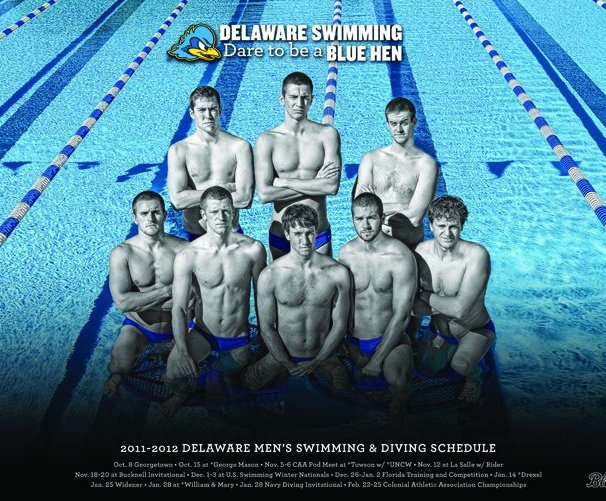
My boyfriend, whom I met on the swim team in college, told me that he had wanted to go to Rhode Island, that he was signed and ready to go to Rhode Island. They called him last minute, telling him they cut their boys team. (Thank God, or I wouldn’t have met him. Best decision Rhode Island ever made.) So he had to change his plans. He was in line for a scholarship from RI, but at Delaware, boys scholarships weren’t really available (they were saved for football). So I watched his dreams change as he adjusted to the consequences of Title IX.

During the spring semester in 2011, I had the opportunity of speaking with several of the athletes on the UD Track and Cross Country teams. I invited them on my TV show to talk about the fact that the school had just reduced these varsity teams to club status. There was outrage across campus about this decision. Students couldn’t understand why the football team (which wasn’t the best football team) couldn’t get slightly less funding. They couldn’t understand why the university couldn’t promote a girls club team to varsity status to make the participation equal. I’m sure it was a difficult decision for the school and they felt this was the best option. But when you talk to these kids, as individuals who were really great athletes, who had planned their lives to run track at UD, and you see their varsity-level team get swept out from under them with hardly any warning, then you wonder about Title IX. The track and cross country athletes had dinner with the president of the university to voice their complaints. They signed petitions and spoke to kids around campus. 

These are the boys who are affected by Title IX and just because their numbers may be small in terms of the bigger picture, their sport was important to them. Their individual stories will always be affected by Title IX.

There is no denying that Title IX is doing a great job of promoting sports for girls and enabling their involvement. However, there must be some other way to continue this progress without cutting boys teams in order be be in compliance. Talk to any boy whose team has been cut or downgraded to club status. I’m sure they have some ideas.

Searching for “The Interview Suit”

Hasn’t Elle Woods taught the world anything? Women can be successful lawyers and wear cute pink suits, impossibly high stilettos, and pass out scented resumes printed from their bright neon laptop, while carrying their little pooch in the crook of their arm. Right?

Well, as my public relations professor, Carolyn White Bartoo, would say: Wrong.

So I have potential interviews coming up and obviously I had nothing in my closet that remotely resembled the standard, black, one-or-two-button blazer with functional pockets (for carrying prospective employers’ business cards in one and your own in another while managing to shake hands and draw from the correct pocket. Duh.), with matching pants and/or skirt of the appropriate, right-at-the-knee length, and plain, one-inch-high, black faux leather heels. Oh, don’t worry, I have some plain, drab professional clothes, just not the perfect interview attire. I have a few pairs of presentable black pants, a couple short-sleeved nice blouses, and a pair of worn suede flats. These clothes served their purpose at the time, for events of lesser importance.

But now I am out of college, in the big leagues. This is real, people. It’s time for the Interview Suit.  Which, once I get a job, I will probably never wear again because either I will be in a creative enough field that they will worship my originality and choice of color patterns in my wardrobe, or I will be making enough money to buy a really nice suit that is allowed to show some variation of style. But for now, it’s the Interview Suit.

So yesterday, I headed to the mall with my mom with several stores in mind, hoping to take advantage of her superior knowledge of shopping. My mom had slightly different ideas about which stores might or might not have a “young” suit. I proceeded to tell my mom that I am 22 years old, out of college and entering the professional world–I should not be looking in a juniors department. But we hit all the stores possible in our local mall. And then ended up back at the first one we entered. So let me explain.

Although an avid shopper, my mom had to admit that she is a little out of her league when it comes to suits. She hasn’t worn one in many years. She said she doesn’t even own one currently. So in her head, she is thinking suits come together on the hanger and there will be plenty of options based on whether you prefer Calvin Klein or Anne Taylor or any other number of designers. I had no reason to argue with her logic; it seemed plausible. But we soon realized as we perused Macy’s that these days, while some are still hung together, many suits are sold as separates. Like bathing suits. And like bathing suits (which I also have an incredibly hard time finding), they come in all shapes, sizes, colors, patterns. At least in Macy’s. So we started pulling. She had a pile, I had a pile, we head to the fitting room. With the first skirt/jacket combo I try on, I realize I’m a petite. I don’t even try any of the others, and then we discover there are really no options for petites in Macy’s. Fail.

We moved on to J.Crew and found the most brilliant, perfect, wonderful, incredible suit–for almost $400. Now, some people, who are going to wear a suit many times in their life and keep it forever and love it like a child, might be okay with spending $400 on a suit. I am not one of those people. My mom was ready to throw up her hands and hand over the credit card but I refused. We kept looking. White House Black Market had a few options, on sale, but not my size. Of course, everyone is a size 2 these days, didn’t you know? We went to Nordstrom. Maybe it was the fact that I had my hair pulled into a messy ponytail that day, or that I was wearing a faded Old Navy T-shirt, but the sales clerks at Nordstrom seemed genuinely incredulous that I, of all people, would be looking for a suit. Humph.

“Do you have an interview?” the hundred-year-old lady asked with the air of a grandmother speaking to a five-year-old.

Why yes. I am 22 years old, have a Bachelor’s degree, and I will hopefully be moving into a high-powered job in New York City, thank you very much. Now go back to your register. 

We moved on. Slight distraction at the Victoria’s Secret semi-annual sale. But then moving on again, we realized it was getting late. So we headed back to The Limited, where we had started, having only  browsed the racks beforehand, not knowing what to look for. Well we had a much better idea, three hours later.

So, running out of time, we grabbed the “Drew Cut” and the “Clarice Cut” styles of pants. We dug through several styles of skirts and found a great blazer. I tried on flare pants and boot-cut, blue suits and black. (However, blue suits are hard to match shoes to so I would definitely not recommend that, unless you have some really great blue shoes.) And more quickly than I would have thought possible, I walked out of the fitting room in the perfect, black, tasteful, affordable Interview Suit.

But going back to Elle Woods. She worked incredibly hard to prove to everyone that a blond bimbo from Delta Nu can have just as much brains and be just as successful as any suit-wearing, briefcase-toting Harvard student. She gave her resumes “a little something extra” and stood out in the sea of students with her neon computer. She wore feather boas and sequins and sported her style with confidence and pride. Now, I do not quite share her exact style, but I do wish that it was acceptable for professionals to show their style, to wear a color. For example, I had picked out a red top to wear under the blazer in Macy’s and my mom raised her eyebrows. “Red means power. I don’t think you want to show power in a first interview.” Why not? Why can’t I show my confidence and wear a color of my choosing? Why can’t I deviate from the masses, stand out in my own creative and tasteful way? How am I supposed to stand out as the best candidate for the job if I look exactly the same as everyone else?

But, again Carolyn White Bartoo would be tutting at me. People judge. Employers judge. They make snap decisions. And they may not mean to, but they are not looking for someone dressed in red head to toe who looks like she’s going to take over the company. (Because apparently wearing red means that’s what you’re set out to do.) Employers want candidates who look put together, professional, and competent in a plain and subdued way. When you get the job, dress however you want, if they let you. But in the interview, you have to show your style in your words and in your previous work.

Elle Woods actually took a lot of crap in the beginning of her Harvard days because people immediately judged her. And in the interview, you only get a few seconds, a few minutes to make that impression, and you don’t need any distractions.

Oh well, I guess I can wear red tomorrow. But at least I got the Interview Suit.

The Global Reality of a Media World

I read an opinion column today in the Pittsburgh Post Gazette about the state of the world discussed at Rio+20, in terms of carbon emissions, climate change, and sustainable development. The author, Jeffrey D. Sachs, and those at the United Nations Conference, call for an end to extreme poverty, less carbon emission from the energy system, slower population growth, sustainable food supplies, and protection of the environment. But those of you reading this, who probably have at least six other tabs open on your screen, switching from Facebook to Pinterest, updating Twitter on your phone, while texting your friend, are probably nodding your head in agreement, thinking yes, it’s probably a good idea to save the world, yet how many of you got up to turn a light off? How many of you have the TV on while you’re on your laptop, reading blogs and updating social media, obviously not even watching the TV? I admit, I have the TV on. I like having the Today Show on in the background of my morning and if something interesting stands out, I turn my attention to the television.

This is the reality of the world today. People are perpetually connected and plugged in and so immersed in their personal lives and the virtual lives of their friends. People would rather “pin” a link to their dream wedding dress and tell hundreds of Twitter users that the line in Starbucks today is incredibly long than shut off their technology and plant trees. I’m not saying that all people are like this, but this is our reality.

On the other hand, our reality is also high carbon emissions and global warming that eventually will destroy the planet. This is what scientists tell us, but so many people don’t believe it or don’t want to believe it. These claims seem extreme. People just aren’t motivated to look outside their own neighborhoods. We say we want what’s best for our children and no one can deny that. But our ability to look far ahead, hundreds or thousands of years is limited. We see the reality that is right now and right now the sun is shining, the grass is growing, the birds flit around the backyard. Right now the kids have enough to eat and go to great public schools. Right now, I can’t afford a new energy-efficient vehicle, but that’s okay because there’s enough gas in my car, and GetGo and Giant Eagle are helping me save a few cents at the pump. The concern about overpopulation, famine and disease in third world countries doesn’t hit home because, well, we can’t see them. All we see are the sad, slow-mo advertisements on TV telling us to donate just 25 cents a day, but everyone thinks those are over-exaggerated to draw a few more quarters from the crowd.

So what can be done?

If we can’t get everyone to agree on the current state, how can we possibly expect people to agree on the measures that must be taken?

So many people are calling for action from the younger generations. The recent college graduates, like myself, and the students. Treaties and “Sustainable Development Goals,” while great in theory, won’t work unless the information and the impact somehow resonates with the young, tech-savvy, Facebook-stalking, status-updating crowd. So how do we make it resonate? As a communication major, passionate about media, TV, video production, I am a firm believer that media can reach people in ways that newspaper articles and politicians can’t. The only problem is that even media may not always work. You might remember the KONY2012 video that almost instantly went viral with almost 1 billion viewers on YouTube. This video resonated with me and probably hundreds of thousands of others. But it did not resonate with everyone. The video was a big topic of discussion in my college media and politics class and it is up for debate why this video was such an instant hit and then almost just as quickly fell from the spotlight. I’m sure it motivated some people to buy the bracelets and post signs and this kind of enthusiasm is what we need to save the world, all the time. (But that’s another topic.)

So when you think about how to reach the audience, the young internet generation, a YouTube video might work. Or a Facebook page, or a Twitter account, or a blog post. A story on the 6 o’clock news might work, or the endorsement of pro athletes and celebrities. But really, it’s going to be all of that and more. The world won’t change just because someone writes a blog post, or a newspaper column. It won’t change if someone makes the most creative 30-minute YouTube video of the year. It won’t change if politicians put it to a vote. In Sachs’ article he writes, “Since politicians follow public opinion rather than lead it, it must be the public itself that demands its own survival, not elected officials who are somehow supposed to save us despite ourselves.” The public will only demand change if we all agree. The whole world needs to agree. We will only all agree if we are inundated with the information, if we are convinced through all outlets that this is the change we need to see.

We see evidence every day of technology becoming better and people wanting to use it. Take Apple. They could come out with a new, faster, better product every month (oh wait, they do…) and people buy it and use it and promote it. People want better things, they want to be on the edge of innovation. We wouldn’t have students majoring in engineering and science if this wasn’t true. We just need the motivation to convince the world that sustainability is what’s better. That energy-efficiency is what’s better. That everyone’s lives will be better if we all adopt this world-saving technology and practices. I hope that this blog post will add to the global conversation. Hopefully others will continue to flood all media with the facts and someday soon, maybe we’ll all agree.

The Job Search for the College Grad

I have been home from college for a little over two weeks. I don’t have a job yet, not even a summer job. I will soon have to start paying back my students loans with what meager earnings I made through school. The thought that I don’t have a job is never far from my mind. And despite all this, I am slowly learning how to sit back and just enjoy the extra time I have.

I have been applying to jobs every day since I got home from college. I’ve emailed contacts that I’ve made and reconnected with older students I knew from school. I’ve updated my resume and perfected my cover letters. I’ve organized videos on my YouTube channel and retweeted some great job-searching tips. I’ve added more connections on LinkedIn and created this website. So I know that someday, some form of electronic media will reach the right person who will give me the perfect job that will lead to my dreams. I will continue to apply everywhere and follow up after interviews. I’ve read enough articles and blogs about the job and internship hunt that I know that I am doing everything I should be doing. It will all work out eventually.

So this summer, I’ve started to learn that it’s okay that I’m not busy right now. I’m so used to having a packed schedule with barely enough time to eat between classes, shooting video, working at a restaurant, editing, and hanging out with friends. I like the bustle of a busy schedule. I feel that I get more work done when I know that I have only a set amount of time to get it done. It has taken some adjustment for me to realize that the world will not end if I have time to actually take a nap or listen to music.

My first order of business when I had gotten home from college and unloaded the car was to immediately unpack, rearrange the bedroom and organize my stuff. “Set up camp” if you will. I created an organized workspace in a corner of my room, amid the deeply unorganized crap that my brother had brought home from college and never unpacked. But that’s all right because here I am at my old-fashioned roll-top desk (which my laptop doesn’t truly fit on), with pencils and notepad within reach (in case of a phone call from an employer offering me a job), and my to-do list constantly updated (“find a job” is always at the top). And the first couple days I sat here diligently until I realized that I needed to take a chill pill, spend some time with my family, read a book and enjoy what little unemployment time I have (because let’s face it, the retirement age will be at least 90 by the time this generation gets there).

So I picked up A Widow for One Year by John Irving and haven’t looked back since. Yes, I’m still applying for jobs every day and I’m still keeping myself organized, but I’m managing my time more wisely. I’m working out in the mornings, chatting with my mom over breakfast, learning to play pool with my brother and taking naps in the afternoons. After being away at school for four years, I learned to really appreciate the time I have with my family. We’re all growing up quickly and starting to head out into the big bad world, so I was wonderfully blessed with this extra time to spend with them. One of these days, I’ll get a call about a job offer. But for now, I’m fine with relaxing a little bit.

The Best of Luck

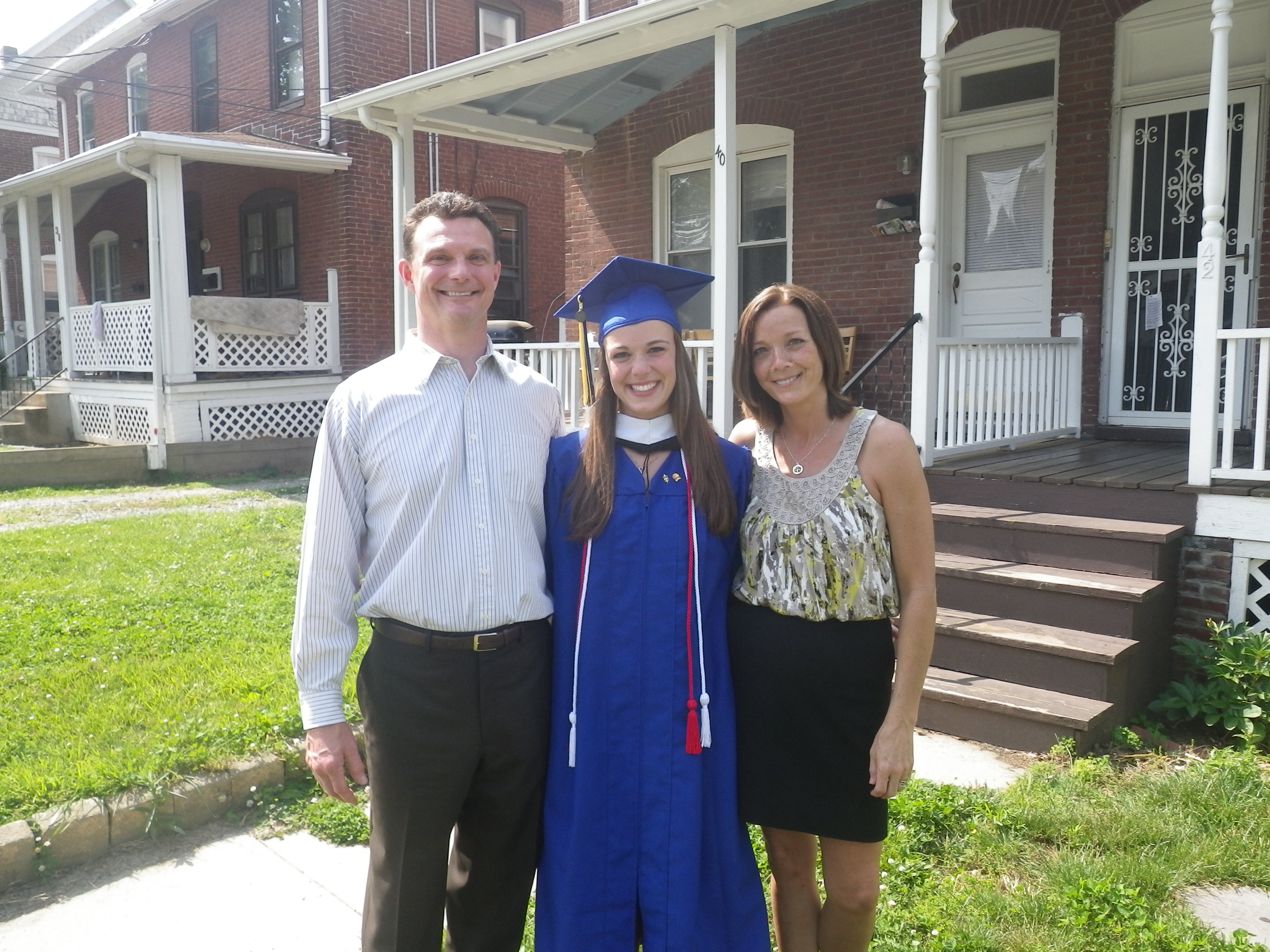
My sister graduated from high school yesterday. She wore my white gown and straightened her long hair and posed with our parents and her friends. She walked with way more elegance than I had four years ago. She graduated in the top 10% of her class and wore a sash to show her membership in the National Honors Society. She’ll be going to James Madison University to study nursing. She looked beautiful last night, in the setting sun, the slight drizzle from a single obstinate rain cloud, with a double rainbow in the background of a newly renovated football stadium. She has it way more together than I did.

As I sat in the stands, holding a program over my head to fend off the rain (having dutifully forgotten the umbrella that was sitting on the floor of the car, merely 100 yards away), I looked forward to the Commencement speeches and hearing what the students had to say about their high school experience. I’m always curious what words of wisdom an 18-year-old can come up with, having not seen much of the world from our “bubble” as we call our town. As I was sitting listening to the speeches of my sister’s classmates, I suddenly and sadly realized that I don’t remember who spoke at my own graduation. I don’t remember their words of wisdom or their hopes for the future. I don’t remember my brother’s graduation speeches two years ago either. As much as I look forward to hearing what people say, all I remember from them are words that are hopeful and happy, remembering wonderful days of high school and looking forward to making dreams come true. That’s what high school graduation speeches are always about.

But in my experience, high schools days were not always that happy. Dreams don’t come true right away. The world doesn’t change just because you go to college in a different city. I may sound slightly cynical here, but I’m only telling the truth. High school is a long, hard road with bullies and mean girls, failed grades, terrible relationships, love found and lost, a rollercoaster of emotions and milestones. I think everyone would also agree that the entire, roughly 260-person, class of 2008, or 2012 (or whichever year you graduated) was definitely not all friends. When I graduated there were a few people I had never even met. (This is not to say that I never had fun. I had plenty of good times in high school.)

So when students go to the podium and face the crowd of proud and expectant parents, they tell them what everyone wants to hear. That their time at school could not have been better. That they worked hard, played hard, had fun, but learned so much in the process. That they all grew up and became the best of friends and now that they’re parting ways, they will move on to bigger and better things, but retain their loyalty to the place where they grew up and the people that helped them along the way. This is what parents and administrators like to hear.

(As a side note, my high school no longer ranks students in terms of GPA, so instead of valedictorian and salutatorian speeches, they chose and carefully selected the “best” entries from the students’ speech submissions.)

This year, the school chose as their distinguished alumnus, a man who has worked as a cinematographer for National Geographic, BBC, the Discovery Channel, and ABC. He was not able to be at the Commencement to give his speech, so his childhood friend stepped up for him. What stood out in his speech was his continuous reference to how hard he worked and how he made the dreams in his life come true.

I disagree with his philosophy. I think that it does take a certain amount of effort to achieve your dreams. It does take hard work to get through college and earn a degree. But really, living out your dreams is largely a matter of luck. If your dream is to become a professional baseball player for example, it is luck that brings the right recruiter to the right game where you happen to play well. If you want to work at National Geographic, you can work as hard as you like, practicing photography and researching. But it is luck that brings you into contact with the editor on your vacation in Naples. Out of all the millions of people that you could meet, you must be lucky enough to meet the right person, at the right time, who will make your dreams come true.

This distinguished alumnus also acknowledged in his speech that some of the graduating seniors may not know what they want to do with their lives or what they want to be. And he told them that that’s okay. He said there is plenty of time to figure out who you are and to take the necessary steps to get there. Again, I disagree. As a senior in high school, I was one of those grads, sitting on the field, drinking in advice like this. I had no idea what I wanted to be “when I grew up.” Now four years later, I wish I had taken a little time to explore more and figure it out. If you don’t know where you want to go, then you don’t know how to proceed, and it will take you a lot longer to get there than if you had taken the time to figure it out sooner. Talk to anyone who has changed their major more than once and they will tell you. They are spending thousands of extra dollars “figuring it out,” completing their degree years behind their peers and entering the workforce with a disadvantage because they didn’t get the same internships, not to mention they have more debt. Everyone needs some kind of goal, or you will never achieve anything. So those speakers at Commencements who are telling students that it is perfectly okay to not have a clue what you want to do are lying. Have some kind of clue.

So I look at my beautiful, confident, radiant sister and I applaud her. I commend her for working so hard in high school, for discovering her talents, and already having her dreams in sight. I hope she thinks back on her high school days as mostly fun and wonderful. I hope she goes to JMU with an open mind and an open heart, and always remembers where she came from. And most of all, I hope she continues working hard, but I also wish her a little luck.