Movie Review: “Blood Brother”

I went into the theater expecting to cry. A movie about poor, Indian children with HIV/AIDS is heartbreaking, why wouldn’t I expect to be bawling my eyes out in five minutes?

But surprisingly, I found myself laughing more often than shedding tears. The documentary, “Blood Brother,” focused on the reality of what this young man, Rocky Braat, was doing for the orphanage in India, but the pleasant surprise was that this reality was not all bad. It wasn’t all tragic illness and hardship and death. It was definitely those things. But the reality was also that these children are just like any others- ones without AIDS, with both parents, with a need for love.

Rocky’s goal to care for all of these kids, to love them and treat them like they aren’t sick, is heroic. His decision to move to India, stay there, get married, and care for these kids, was obviously not made lightly. And considering he moved into a completely different culture, where, in his words, “they are 70 or 80 years behind the times,” it is no wonder he faced challenges. But he could overcome those because he knew that what he was doing had a purpose and it was bigger than himself. He was and is saving these kids.

Rocky and his friend, Steve, said multiple times before the movie played in the theater and in the movie, that they aren’t funny, they wish they were funnier, that India sucked the humor out of them. And yet the film was filled with every small, happy moment that you would never imagine a child living with HIV/AIDS in India to have. They ran and laughed and played. They were hung by their pants in trees and played practical jokes. They spoke with the innocence that only children have. They loved unconditionally because they were in such desperate need of love themselves. They smiled with their whole faces and were proud of even their smallest accomplishments. They fully enjoyed and appreciated pizza more than any American kid I know. And all of this made the audience laugh- made us love the kids ourselves, made us forget the fear of HIV/AIDS.

The biggest impact of this whole movie, I believe, is seeing the human emotions cross boundaries and cross cultures. We may not understand their religious customs, or their beliefs or rituals, or why they don’t have running water or toilets. We may not understand their eating habits or transportation or the way they build their houses. We may not get the way people in India live–but we understand their sadness. We see pain and suffering. We understand happiness and joy. We see the smiles and laughter. And we get that. And that is why people will see this movie and donate money to help Rocky and the orphanage. That is why people like Rocky go to these countries. That is why we can laugh when these kids make jokes and why we cry when we see them on the verge of death, battling AIDS. We may not understand cultures, but we understand human emotions.

This documentary also shed some light on AIDS and HIV. I don’t believe it was entirely intentional, but nevertheless, the audience is struck by how people view the disease. People in India have this view that HIV/AIDS is something to fear. They aren’t entirely educated about it. They are so afraid, they shun the women and children, won’t touch them or eat the same food. Disease and illness and death is scary. But these children can feel the fear and you can see that it kills them. That is what is heartbreaking–to see how the kids are affected by hatred.

What would any American do in that situation, though? Are we so superior, so much more educated that we wouldn’t fear them as well? How many people do you know with HIV or AIDS? This fear is not unfounded and it is not something to admonish. Many people are afraid. Fear is a lack of understanding, and HIV/AIDS is a difficult thing to understand. The important thing is to learn–to realize that the kids need love and attention and care, and that touching them and cooking their food does not pass on the disease.

This film shows a true and real side of children in India that is not all tragedy and despair. Those kids captured the hearts of the audience, just as they captured Rocky’s. I did cry at the end of the movie, as Rocky got married to a beautiful Indian girl and hugged his best friend and took pictures with the kids. I cried because he found his happiness in being with these orphans.

I had to quickly wipe my tears before the lights came up, and as I walked out of the theater into the city of Pittsburgh, all I could think was, “why do we need all this stuff?” 


photo credit: http://dribbble.com/shots/513963-Blood-Brother-Promo

The Pursuit of Something Else

Sometimes I compare things in my life with movies. I’m sure everyone does, but maybe I’m a romantic and you hear me saying it more often. You know the phrase, “-but that’s how it is in the movies!” or “it never happens like that in the movies.” And people respond “yes Meg, but those are just movies.” 

Well I found myself doing it again. You see, I have good days and bad days, as does everyone. On the bad days I wonder where my life is going and whether I’ll  ever get a real job and I think about my friends who live far away and can’t visit and the student loans I’ll have to start paying because my six-month grace period will be up….. And on the good days I remember that life is an adventure and I’m just living it- that everything will eventually work out and then when I’m old this will all be part of the awesome story I have to tell.

So the other day, I was having a good day. And for some reason I started thinking about the movie, The Pursuit of Happyness. For those of you who haven’t seen it, it is based on a true story about a young man with a wife and child living in New York City. The man is a door-to-door salesman, but his hospital equipment isn’t selling well. They can’t make rent and his wife leaves him and their son. And this man just thinks that if he wore a suit and worked as a stock broker in a big city building that his life would be happy. So he takes this unpaid internship, while still trying to sell the hospital equipment and raise a son, and he goes through arguably the hardest part of his life and comes out the other side.

I own this movie, but I don’t think I’ve seen it in awhile. Which is why I was surprised that I was just driving along and it suddenly came to me. And I wondered, are we really in the pursuit of happiness? I don’t know if that phrase is quite accurate.

I find myself in a similar, but most certainly not exact, situation. I took an unpaid internship, in addition to the job that makes the money, and at the end of it, I hope a real job will be in closer reach. I’m working almost every day and I’m busy and stressed. But remember, I was having a good day. So I kept in mind that I don’t have a spouse that just left me, I’m not saddled with a kid, I don’t have rent to pay (right now), my internship isn’t a full time job taking up all my time, and I’m not homeless and sleeping in subways. And suddenly I felt much better about the situation.

My internship is two days a week, four hours a day. So far they haven’t had me doing anything super exciting, but there is the prospect of doing exciting things down the line. I really like what the organization is doing and the projects that I’m working on. It’s all very peace-hope-and-love stuff that you can’t help but get sucked into. The interviews that I’m transcribing right now do give me a little hope for humanity, if only there were more people with as much positivity and kindness as this woman. And I love the atmosphere of this non-profit/public television workplace, the people who say hello to me in the halls and the good vibes you get when people love their jobs.

I’m definitely in pursuit of something, but I don’t think it’s happiness. Hopefully there aren’t a lot of people in the world who are in search of happiness. I think that happiness can always be there, but often people are too tired or stressed to notice and accept it. And so they think they’re not happy. In the movie, Will Smith had happy moments, I think. His son was a huge source of happiness for him, when he noticed. The problem was that he broke his life down into a tiny little word used to sum up the whole time period (example: “This part of my life is called running.“) But life is so much more complicated than a single word and he limited himself by boxing it all in like that.

As for me, I think I’m happy. I think I have a lot going for me if I have a good day and take the time to remember it. I’m in pursuit of something else. The pursuit of a plan. Or stability. The pursuit of a long-term achievable goal. I wonder if we could spell that wrong and make it a sequel. I’m clearly in pursuit of something, but if I weren’t, my life would be boring. And I’m really looking forward to having a good story to tell.

It’s the People at the Restaurant, Not the Tips

There are a lot of things I could say about working in a restaurant, and things that I already have.  Most things you notice about restaurants, whether you eat at them or work in them, are obvious. The food, the service, the tips, busy nights and slow nights and late nights. There is good service and bad service. People leave good tips for good service, or bad tips because they were never taught otherwise. Or no tips, I get those too. But I don’t want to tell you about tips. I want to tell you about people.

Servers are there to make money. Let’s not step around that fact. We are there for the tips. The good ones, that is. But sometimes, every once in awhile, you get a chance to slow down a little, you step out of the kitchen and away from the computer. Your tables are happy and no one needs anything. And when you look around you, you get a chance to see the moments of other people’s lives. You get a glimpse into other people’s worlds. You can see what other people are going through, or you can imagine what their lives might be like when they get home to their kids. And this is something that I have found spectacular about working in a restaurant. You see so many kinds of different people, so many people, all the people. You say a few words to these people and watch them for a few seconds. You see them eat food for a few minutes and a whole world opens up behind them.

On busy days, there isn’t much time for people-watching, but sometimes there is the rare day when it’s a slow afternoon and at several tables are seated just the most intriguing human beings.

There’s the e-Harmony date. A man and a woman walk in and sit at a table near the bar. They sit across from each other and order a bottle of red wine at 12:30pm. The woman is rather loud, the man is more soft-spoken, with a kind face. They’re leaning in to each other and laughing a lot throughout their conversation. It’s probably a good date, maybe there will be a second. They sit there until 5pm, three bottles of wine later. Definitely a good date. She had mentioned several bad first dates she had been on, so maybe that’s a good sign. Maybe she’ll go home after the date and call up her girl friend and talk all about the kind, gentle guy she’d gone out with and how he’s completely different from the other guys she’s dated and she’ll talk about possibilities. Maybe he’ll go home and Google-search her for a third time. Make sure she’s not too good to be true. Or maybe not. But I saw that they were on a date and enjoying each other’s company.

There is a table with a very young couple. Probably about 17– at least driving age. At first the boy looks mad; it looks like they’re fighting. The host told me he had slammed the car door shut and walked in about 10 feet in front of her. But then they’re at the table and while we’re speculating what the fight is about, he starts crying. Maybe his uncle was diagnosed with cancer. Maybe his grandmother died. His girlfriend is comforting him as best she can and they are clearly not fighting. They have a quick lunch and leave together. Just a glimpse into someone’s life while they eat.

At another table sits an older couple. It’s the end of the night, the crowd has died down and they’re sitting next to each other in a rounded booth, clearly still in love after 40, 50, 60 years but quiet, as if maybe they’ve said all they needed to say out loud over the years and now words aren’t needed. So when I greet them they are anxious to talk and they tell me about their lives. The man told me that they were from Delaware, since I’d mentioned that I just graduated from school there. He said he went to school at Duquesne and it took him thirteen years to graduate, taking night classes, because he was already married with kids and working a full-time job. But he did graduate and he is still with his Mrs. having dinner.

Every table has a story. But as waiters and waitresses, all we see are the minutes when they’re sitting at the table and all we can do is speculate. But each table, each snapshot is unique. Each family looks different and acts differently. Some families are loud and messy, with lots of children. Their lives are probably hectic and they probably don’t get out to eat very often. Maybe they’re like my family and celebrating a good report card. Other families are quiet. The kids are older and don’t want to be seen with their parents but their parents love them anyways. Some tables contain old friends that haven’t seen in each other in years. They order a drink and wait hours to order their meal, just to make the time pass more slowly. They pay the check and sit for a few more hours, their glasses of water all but empty. Maybe they were college roommates, or maybe they both got screwed over by the same guy and found a common bond that lasted all their lives.

These are the moments that make up these lives. Their trip to the restaurant might become part of the story they tell their grandkids. Their moments are special and brief, for us, but maybe for a few minutes I can live vicariously through them. I can be at their business meeting or their jewelry party and be part of that moment. I can take a picture of the old friends and I can make small talk and smile. I can give them that because they all have given me these small glimpses into their lives.

Maybe this is what makes people like working in a restuarant so much. Seeing a moment of another person’s life, speculating what the rest of it might look like. It’s just a snapshot, but sometimes, a picture equals a thousand words.

It’s the Old Mac vs. PC Question…Answered

This is dedicated to all of the die-hard Mac-lovers out there. You have converted me.

I just got my Macbook Pro this past weekend, after contemplating buying one literally all summer. I had surfed the Apple website and compared all the versions of MacBooks. I “built” my own and added little extra’s to see how many thousands of dollars this piece of technology would set me back. I made a trip to the Apple store in the mall and spoke with one of the hundreds of “blue-shirt guys”. Of course it was the first day that the new 15-inch Macbook with retina display came out and he had me hooked. After I saw that stunning screen and he opened hundreds of applications on the computer all at the same time in a matter of seconds, I couldn’t possibly consider something else–at least not that day. So I went home empty handed and kept comparing. I asked friends what they recommended and I even chatted online with an Apple rep.

wanted a new computer, but my old one was technically still working. Technically, I didn’t need one. But then I got my internship and they told me to bring a laptop. And I realized I would be lugging a 20-pound piece of ancient history that took half a lifetime to boot up and the other half to shut down. This artifact couldn’t hold a charge long enough to turn on and had to be plugged into an outlet 100% of the time. When it was finally on, you might start looking around the room or out the window, looking for the helicopter that was landing–that’s how loud the fan was trying to cool it down. I was afraid to turn the computer off though, or even close the screen because sometimes it wouldn’t shut down properly, or restart properly. I was walking on eggshells with this PC but I wanted to make it last as long as possible. And now, its time had run out. 

The coolest thing about buying a new computer and switching from a PC to a Mac was how easy it all was. I decided on a simple, 13-inch MacBook Pro with more memory and a better processor. The blue-shirt guys were very helpful and made me feel confident about my decision, which was especially reassuring since this is one of the biggest purchases I’ve made in my life thus far. And they took it from there. With the One-to-One membership, they took my old computer and transferred all my documents, pictures and files to the new one. They walked me through the steps of setting up accounts and explained how I now can sign up for any one-on-one classes where they’ll teach me anything I need to know. Not that I’m a complete idiot when it comes to computers. Macs are pretty simple.

When the blue-shirt guy was getting ready to take my PC for the transfer, he asked whether it had Windows Vista or Windows 7. I didn’t know. He asked what the password was to get on the computer, I didn’t even know that because I always used the finger-swipe feature. I’d had this computer for over four years and I couldn’t remember how it had been set up for me. I just wanted to keep my files and start fresh. I was tired of having someone to clean up the 76 viruses found on the computer, and the random toolbars that pop up from downloading certain software. I wanted a Mac.

And now I have this beautiful, pretty little computer that’s light and small and silent. It’s sleek and functional. It doesn’t have extra crap on it that I don’t use and I know the password to log onto it. It has a 7-hour battery life, if I’m not watching videos at the highest screen brightness. And it’s super fast.

When I was sitting in the Apple store waiting to transfer the files, I was eavesdropping a little bit on people’s conversations about the problems they were having. I wanted to know what I was getting into. One girl said something about her Facebook and Twitter accounts not working on her iPhone. The Apple genius did something really simple to it and restarted the phone and voila, it worked. Another older woman was telling an Apple genius that her Macbook had a very short battery life. He calmly pointed out that she was using her Mac with the screen brightness set permanently at its highest. He told her to turn the brightness down and she’d add a few hours of battery life. Another woman said her iPhone battery was also very short and the genius said that it was because the battery had suffered damage when she dropped it without a case.

So lessons learned–don’t keep the screen at full brightness, don’t drop my Mac (duh), and don’t be an idiot. This is not to say that there are never ever any problems with Macs, because I’m sure someone will argue that they actually were in the 1% who had a legitimate problem, but for the most part, it seemed that Mac problems were easy to fix, or not really problems at all, as long as you’re careful with expensive technology.

So far, I’ve been having fun playing with the multi-finger swipe trackpad and updating the calendar app, and using FaceTime and iPhoto and Stickies. I forgot how much fun it is figuring out new technology. I might take advantage of a few one-to-one sessions just to make my life easier and make use of all the apps.

People are so polar about computers. They either love or hate Macs. There’s always a Mac vs. PC discussion. I never got it. I had a PC and I’d always had a PC. I knew I didn’t love it, but I didn’t know any different. But as I got to use Macs more for school and with my friends, I realized these Mac people might have a point. And so I finally gave up the old clunker. I’m a convert, and I love my Mac.

My Travels into the Steelers Nation

If you’ve never had the opportunity to watch your favorite sports team play at an away game, you should make time to do that right now.

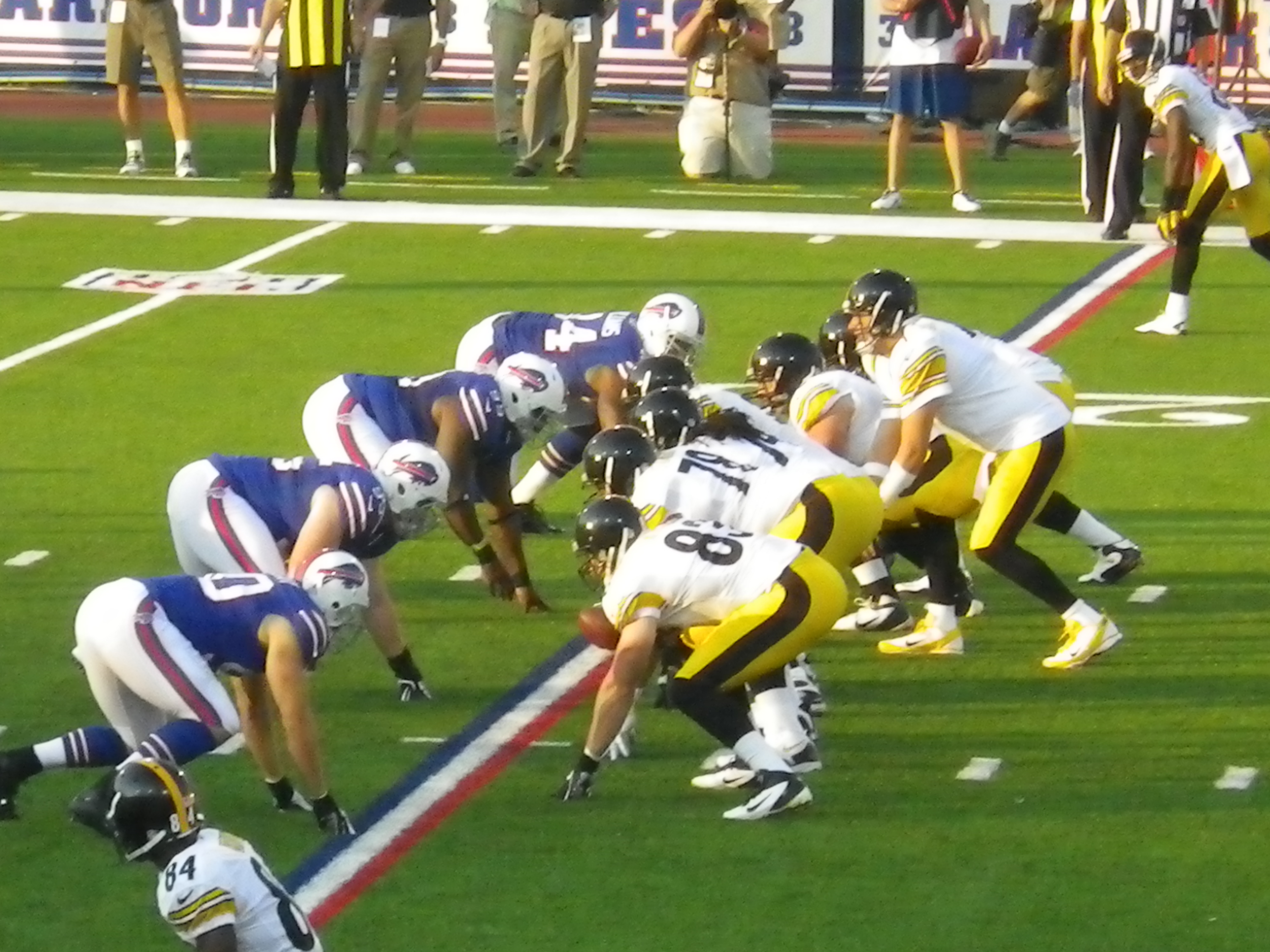
Two weekends ago, I visited my boyfriend in Buffalo, New York and we saw the Steelers play against the Bills. It was only my second time going to a Steelers game, I believe, and my first time seeing them away. You see, when I was younger, I was told the Pittsburgh Steelers games get really rowdy and there are too many drunk guys who get so worked up about an incomplete pass or a sack that it’s not morally a good decision to take young children to games. Not to mention that the tickets didn’t exactly sell like $12 Pirates tickets– so with limited funds and a straight moral compass, I just hadn’t gotten to go to many games.

But there I was in Buffalo, wondering what it would be like to wear my Steelers jersey. I told my boyfriend he had to defend my honor, even though he was a Bills fan. I was also thinking about the fact that my jersey was slightly out of date. Randel el officially retired this summer and is no longer on the team. But the good thing about being at an away game, I thought, was that few people would even realize this fact. So the jersey stayed on.

And good thing it did, because after we parked in someone’s front yard near the stadium, I saw almost as many Steelers jerseys and Terrible Towels as I did Bills fans. It was like I’d found long-lost family. With every interception the Steelers caught and every touchdown scored, the Steelers fans grew louder. After half-time, Bills fans left the stadium in droves and Steelers fans outnumbered them in their own city. You could look across the stadium and see crowds of black and gold with yellow towels waving proud. I was high-fiving the 7-year-old kid next to me and making bets with the couple behind us (all of us Steelers fans of course). You could hear “Here we go Steelers, here we go” resonating from the end zones. It was quite a sight.

But what was also amazing to see was the level of pride the Bills fans showed. Excuse my telling the truth, but we all know the Bills haven’t had the greatest track record. But despite the fact that they showed up to the game knowing they would inevitably lose, they did still show up, they wore their jerseys, they painted their faces, they cheered for their lone touchdown in the first quarter, and they brought their kids to pass on their pride to the next generation. They weren’t sore losers, they probably just left after half-time because the kids needed to go to bed (it was Kids’ Night, that’s why there were so many there).

There was a young man in the front of our section who started the wave. Now, I’ve been at sporting events where one wacked-out guy tries to start the wave (dude with the crazy wig at Penguins games, this would be you) and it never truly works. You get two or three sections that follow along but it’s always brought down by the people who are actually dedicated to watching sports and the people with so much food on their lap they can’t stand up anyways. But not at the Bills/Steelers game. This guy started this wave and the entire stadium joined in. I wish I could say every single person, but that’s probably not true–but it sure looked like every person if you saw it. It went around at least ten times, flawlessly. Granted, the Bills fans at this game were not interested in the game since they were already losing by at least two touchdowns. So it was seriously awesome seeing all of these people, who don’t know each other, who aren’t from the same city, and who probably wouldn’t like each other if we were all to meet, standing up as a single “wave.” There might have been a major play that occurred during this wave time and I’m sure not many people noticed. I sure didn’t, I was too enthralled with the fact that people really just want to be a part of something. And especially when their team fails them, it’s fun to be a part of this crowd, this “family,” for a few minutes. For a few minutes, doing the wave, we all had something in common.

Everyone was so into it, that when it finally died, this crazy wacko started doing a slow wave (kind of like a slow clap). And we all did it. It didn’t make it all the way around the stadium because I’m not sure the other side knew exactly what we were doing. But our side of the field raised our hands in slow motion and sat back down in slow motion and watched the next few sections to our right follow suit. Talk about crowd mentality. We’re all doing something just because all the people around us are doing it, but we like that sense of belonging.

As we left the stadium, I got high-fived by a couple other Steelers fans and heard all the ruckus they were making, in true Steelers-fan style. The Bills fans walked out calmly, not bitter, not angry at our celebrations, because they still had a good time. They still supported the team they grew up with and love, and they all did it together.

This is a Steelers nation and you will find Steelers fans across the U.S. in practically every city. And we are all proud and we all bleed black and gold. So I do think you should go see an away game. I think you should experience the camaraderie, the feeling that you’ve found family far from home, people that you can high-five and cheer with. And hopefully you’ll find great people from the enemy’s side, who also find that camaraderie, just in being at a football game. But if you’re going to a Steelers game, I wouldn’t recommend going to Cleveland–you’d probably have a whole different experience.

An Explanation of My Life’s Next Chapter

And suddenly, with little notice, the unemployed has found herself incredibly busy.

For the first half, or more like two-thirds, of the summer, my days consisted of my morning coffee and newspaper routine, while watching the Today Show, followed by a trip to the gym or to the park for a run, then a few hours scanning career search engines and company websites, sending out a few resumes here and there…and then I would relax, read a book, sit in the backyard and get a tan, watch movies, take naps. I had quite the life, you might say. Student loans, cell phone bills and the prospect of a needing a new computer were hanging over my head, but no matter–I had time to nap. What working adult can say that?

But then I finally got through my server training and now my schedule has me waiting tables about 35 hours a week. I continued teaching swimming lessons to my neighbor as long as I could but I taught the last one last week. I still have my coffee in the mornings, but I don’t always have time to run or play around on the internet. Definitely no time to nap. And as soon as I got used to this new routine, I got an interview for an internship with a non-profit entertainment media company. I interviewed on a Thursday and on Monday, I got an email telling me I could come in to start the very next day. So now I’m interning two mornings a week and am able to keep working full time at the restaurant. Thankfully there are no more swim lessons.

I’m busy now, but grateful to have something to keep me occupied. Since the work schedules only come out the week before, I can only take my life one week at a time, but this suits me for now. I can still request some days off to visit my boyfriend or see a Steelers game. And let’s face it, too much time spent with the family would have started making me crazy after awhile.

So this little blurb is brought to you by a busy working girl to explain the lack of recent posts. And I have just gotten my new computer, so now I will be so excited to use it that you should probably expect a post every day. Or twice a day. Because it’s such a pretty little computer and I can’t let it just sit there.

My name is Meg and I’ll be your server this evening…

It’s the job you get during college, to make money for weekend fun and to stock up on Easy Mac. It’s the job you get because your parents want you out of the house during the summer. It’s the job you get because you spent all your money on weekend fun and now real life is glaring right in front of you after graduation. And then it’s the job you get because the real job seems to be eluding you, the unemployment rate is rising ever higher and you can’t stand one more day in your parents’ house.

Waitress. Server. Restaurant work. Busboy. Server’s assistant. Runner. Cook. Dishwasher. Whatever you want to call it. You’re working in a restaurant because it’s probably the one job where the unemployment rate is practically 0%. Restaurants are constantly turning over employees, whether they lose them to high school or college, or people leave for their real jobs, or they show up late and hungover one too many times. And if one certain restaurant doesn’t seem to be having any of those problems then there are a hundred others within a 20 minute radius of your house that would take you.

Restaurant work is not very difficult. It’s repetitive. Table sits. Greet, drinks, take orders, serve food, refill drinks, offer dessert, check. Goodbye, next table please.

It’s all about what you do to earn that tip. You have to be pleasant, smile, leave your emotions at the door. Forget about the fight you had with your parents, forget about the fact that your girlfriend hasn’t texted you all day–any little sign you show of not wanting to be waiting on that table lowers your tip a little more. Be funny. Tell a little joke that will make the people at your table laugh and distract them from the fight they are having with their spouse. Don’t check on them too often and certainly don’t forget about them. Make them feel like they are the only table you have, even if you are running around like a crazy person and sweat is glistening on your forehead. Just try to wipe the sweat away before you ask them if they are enjoying their meal.

If the people at your table are just not having any of it–the food is wrong no matter how it’s cooked, your service is terrible even though you’ve done nothing wrong, the check is too high even though you rang everything in correctly–then you force that smile to your ears as you say, “Thank you for dining with us today and please have a wonderful evening.” And don’t let them see you slam the kitchen door behind you in utter exasperation.

These are some of the things I’ve learned through working in a few different restaurants. I’m sure other servers will tell you the same thing. Restaurant work is not much different, no matter where you are. Some tables are great and others are frustrating, needy, complaining, and don’t leave good tips. In fact, if you watch the movie Waitingyou’ll get a good idea of what it’s like to be a server (with about 92% accuracy, minus the spitting). But  you might actually have to be a server to think it’s funny.

I started waiting tables in college, after I stopped swimming. I suddenly had an extra 20+ hours of time on my hands and I realized I was out of money. Miraculously, a restaurant that was just an eight minute walk from my house hired me as a server, knowing that the only work experience I’d ever had involved swimsuits and lane lines. But they trained me well, taught me the ten core values, drilled the mission statement into my head and gave me a huge written test involving every topping, dressing, and vegetable in the house. And I had “earned my kilt.” (It was an Irish restaurant and our uniform included a mini-kilt.) I became a great server and I loved the people I worked with. I hated 35 cent wing night, $5 burgers and selling shots, but I made enough money to get me through my senior year.

Last summer, I worked at a small bar and grille that might be considered a step down from the college bar. I got two days of training and then they shoved me at a table, where I proceeded to screw everything up because they hadn’t bothered to let me learn the menu. I hated the people I worked with and hated the hours. But hey, they let me read my book in front of customers when I was bored, so I didn’t complain–much.

And now I’m making a huge step up, I believe. I’m currently waiting–both on real-world jobs and on tables. The restaurant is nicer than one I could afford for dinner and so far, the people I’m working with are great. They trained me well, and it was easier to pick up since I’d already been well-trained before. I made a few flash cards to learn the menu and the manager validated me with confidence.

Those early lessons I learned from my first restaurant at college will always get me through the rough shifts. No one taught them to me, they were lessons that could only truly be learned from experience. “Please” and “Thank you” go a long way– with customers, managers, fellow servers, and cooks and dishwashers. Help bus tables, even if it’s not your table or your job–someone will help you later on when you need it. If you’re not sure about an entree or an ingredient or how to ring something in, ask. It’s worse to completely screw up an order and waste food. And always, always smile. You might make someone’s day. And yes, it’s almost always all about the tip, but you never know what kind of nice, interesting, or wonderful people you might meet.

So, welcome. My name is Meg and I will be your server this evening. (smile)

Achieving Olympic Dreams: Running on Blades

Of all the inspirational stories that emerge from the coverage of the Olympics, the one that caught my eye a few days ago was that of Oscar Pistorius, of South Africa. He is called the Blade Runner, using prosthetics in place of both of his lower legs and feet. Oscar is quite literally a runner without legs. If that doesn’t inspire someone, what will?

He was born without fibulas and was not even a year old when his legs were amputated. Think about the kind of life he probably had, growing up. It’s hard enough to live in the hard world with all your limbs. And still he had Olympic dreams. He still knew that he could do more, even without his legs. And luckily, we do live in this hard world, because it enabled him to find a way around his “handicap.” Building him some prosthetic legs put him on the path to greatness. If only it could work like that for everyone with the Olympics in their sights.

Pistorius worked hard and has to have tons of natural talent in order to get where he is today. But he also has to be incredibly lucky. Not every double-amputee with or without prosthetic limbs ends up in the Olympics. He is lucky that he has the money to afford his state-of-the-art legs, and to replace them when necessary. He’s lucky that his case was reviewed and ruled in his favor to allow him to compete in this year’s Olympics. It can’t be easy for him. Why don’t you try running with no legs?

Yet there are still bitter critics saying that his artificial legs give him an unfair advantage; they give him spring in his step that other runners don’t have; they reduce his fatigue because there are no muscles there to use up oxygen and make him tired. But if he had such an advantage, wouldn’t there be more amputees running as fast as he is?

It might be easier for people to yell “unfair!” than to admit that their guy will get beat by a runner with no legs. We want everything to be equal and fair, but that’s not how the world is. It’s not even fair for the people who do have their legs. Some of those runners have had better coaching, or are in a geographically more agreeable country or city. Some athletes are better off financially and can concentrate on just running, while others are trying to hold a job and provide for a family. People aren’t going to come from the exact same circumstances, so can’t we call it unfair for everyone? Can we kick everyone out who we think is too old or too young, not allow someone to compete because they had more time to practice than we did?

His artificial blades were proven to not give him any extra spring. They are shock absorbing, like many running shoes claim to be, but they do not add extra power. I’m sure with today’s technology rapidly advancing, that power boost may  not be far behind. But of course, the Olympic committee would shoot down a competitor with a power boost in their feet, just as they would someone who takes performance enhancing drugs. There is obviously a line between artificial feet and rockets for legs.

It would not be easy to learn to walk on blades and certainly not easy to run fast enough to qualify in the Olympics. Whatever “advantages” this guy has, it is not his feet.  I salute him. I hope he runs the best he can and keeps up with the best of them. I hope he wins medals and proves to everyone that you can achieve dreams even with disadvantages like the loss of your legs. I hope he becomes an inspiration to other amputees in the world, and those who are trying to overcome major challenges in their lives. I do not, however, think that he should be able to compete in the Paralympics after the London Olympics. If he has the chance to prove how great he is now, he shouldn’t need to prove himself again, or against other amputees. He earned the right to compete in the Olympics and he deserves that. But no one else gets two tries. Now that is what is unfair.

As technology continues to improve and we become better able to make limbs for amputees, and give people the chances that they wouldn’t have otherwise had, we’re going to have to keep re-evaluating what is “fair” and who has the “advantage.” It is a continuous process, just as everything else dealing with rising technology is an ongoing process. With everything in a state of constant change, nothing is going to be cut and dry forever.

Oscar Pistorius proves that someone without legs can run in the Olympics. Hopefully this will open doors for others like him and we can continue to be supportive of all athletes who work hard and persevere through all the obstacles they are given.

And if he can run races in the Olympics, without legs, I can surely get off the couch and hit the gym once in awhile. Like I said, truly an inspiration…


image from usatoday.com

Olympic Dreams


This was the year I was supposed to go to the Olympics.

I started swimming competitively when I was nine years old. It was the only sport I could do well, with my flat feet and lack of running skills and hand-eye coordination. I became as dedicated as any swimmer could get. I was the first one in the pool, last one out, before school, after school, weight lifting. Never skipped a set or a lap. (Ok, rarely skipped.) I distinctly remember one of my old coaches sitting down with me to discuss my future in swimming. He asked what my goals were, whether it was getting a better time, beating a certain person, or going to the Olympics. I looked at him, all confused, and said, “Doesn’t every swimmer want to go to the Olympics?”

I calculated my age and the years that the summer Olympics were held and decided that I would probably be at my peak when I was 22 years old, for the 2012 Olympics. I figured I wasn’t going to be a Michael Phelps at age 15, but by 22, I should have it in the bag.

So, yes, this was the year I should have gone to the Olympics.

I would never have come close to the fast times that these Olympians are going. I would have been drowning in their wake as they swam circles around me. I was never, ever on track to swim that fast. I had the most drive and motivation a coach could ever want in an athlete, but you have to have more than that to be the absolute best. You have to have some kind of innate talent and ability that cannot be taught or learned. These Olympians are naturals to the point of having super powers. But children should have dreams. The goal of every young athlete should be to go to the Olympics. It’s what teaches them to work hard, never give up, shake off mistakes and learn to work even harder.

The Olympians, not just those competing in London right now, but all of the past and future Olympic athletes, are heroes and role models to so many people, especially children. I looked with awe and wonder at the massive shoulders of my heroes competing on television and I watched them break records and I wanted to be in their shoes someday. And that is where I learned my dedication and commitment and my drive.

I had posters of swimmers covering my bedroom walls when I was younger. I meticulously cut pictures out of magazines, even tiny pictures that were barely three inches wide. So many you could hardly see the wall. Pictures of Dara Torres, Aaron Piersol, Dana Munz, Misty Hyman, Natalie Coughlin, Brendan Hansen, Michael Phelps. When I took them down sometime in high school, I’m pretty sure I saved them, because I couldn’t bear to throw away my childhood idols. These athletes were the ones that kept me in the pool, made me go to practice, and helped me with my stroke. I imagined I was one of them when I practiced and raced. I watched videos about how Michael Phelps swims his butterfly, and I tried to emulate him. These athletes were and still are my heroes and convince me every day that great things can be achieved, with hard work and a dream.

Every kid in sports needs that. Every adult not in sports needs that. We need to be able to believe that impossible is possible, that dreams can come true. We can see it on the athletes’ faces– the smiles as they touch the wall, score the last point, finish the race– that this is the moment they prepared for all their lives, and we’re living that moment with them. Because those moments are our moments. Those were our dreams too and we might not be the ones competing in London, but that was our goal, that was supposed to be our Olympics. So we’re left to live vicariously through the ones who were lucky enough to be born with the natural talent that we didn’t get, the monstrous shoulders, the massive legs, the precise stroke, the better coaching and more pool time. It’s not difficult to see why we didn’t go, so we’ll settle. We’ll let them swim our races, let them win the medals. We’ll cheer with them and cry for them and our hearts will break for them, in their successes and failures. These are our heroes, representing the United States, representing all of the young athletes whose dream it is to get there, representing all the non-athletes who can still find joy in their triumph.

I will let them swim my races. Michael Phelps, Ryan Lochte, Dana Vollmer, Missy Franklin, Allison Schmitt, Cullen Jones…I guess they’re pretty good, they probably worked pretty hard. But by God, they better swim well. Because that was supposed to be me there.


(image from time.com)


Tragedy in Colorado

The news about the shootings in the Colorado movie theater  is like an addiction. It’s like cracking your knuckles. It’s like driving past an animal killed on the street and you don’t want to look but you just can’t help yourself. Of course we are being constantly fed this news by the broadcast networks and CNN. We are updated through every newspaper and all social media outlets. They are forcing this news upon us everywhere, but even if we wanted to, we couldn’t turn away.

This tragedy hits so many levels of our society, it touches upon all kinds of issues that maybe the nation should be compelled to address. Our hearts go out to the victims and their families because it could have just as easily been one of us, or our brother, or daughter, or girlfriend. Every theater across the nation was packed with the exact same kinds of people, filled with costume-clad Batman fans, anxiously awaiting this sequel, excited to tell all their friends about it. Everyone in every theater bought tickets in advance, stood in line for hours, bought popcorn and flooded these theaters. It could have been any of us. We were all in theaters that night. That’s why we can’t turn away.We hear the victims’ stories and our hearts cry out for them and we just can’t imagine what kind of person could do this, especially the person with that infuriatingly satisfied smile on his face that we see plastered all over TV’s and newspapers.

Twelve people have been killed, and 58 injured. This mass shooting has been compared to the shooting at Columbine High School in 1999. It is the result of a sick person buying weapons and ammunition legally and easily and deliberately walking into a crowded theater and firing at people who had limited ways of escape. Maybe some things need to be re-evaluated in the wake of this tragedy.

The biggest issue that has been raised in the news is that of gun control. Journalists and politicians are saying that Obama and Romney should now have to address this issue in detail and take a public stance. On the one hand, it seems that the government should restrict gun ownership. Right now, we are giving guns out to people who obviously shouldn’t have them. The other side of the coin is that it is our Constitutional right to own guns and be able to defend ourselves. This may be, but so many people will be buying guns for self defense and firing away that we’ll just end up with more innocent casualties. Such laws like those in Florida where the Trayvon Martin shooting occurred not too long ago, allow people to shoot and kill if it is in self-defense and they’re in fear of their lives. But whose word do we listen to?

Perhaps gun licenses should be controlled just as alcohol is controlled. We are allowed to drink alcohol in the U.S., and the government can’t tell us not to. But we have to wait until we’re 21 and there are rules even after that. You can’t buy alcohol for minors, you can’t drive under the influence, bars are allowed to cut you off if you’ve had too many. Maybe people should only be allowed to have one gun and only a limited amount of ammunition. If you have a gun for self-defense, you shouldn’t need more than a few bullets–certainly not 6,000 rounds of ammunition.

Last summer, as a news intern, I sat in on the trial of a young man who killed three police officers. I watched the court go through every piece of weaponry he had in his home and was appalled. The sheer number of guns and amount of ammunition led the court to believe that the act was premeditated, along with other evidence, and I believe that is what we can assume from the Colorado shooter. No normal, sane person needs so much weaponry and I believe this needs to be regulated in some way.

A smaller issue that this shooting might bring up is the subject of violence in the media. Is violence and killing a direct result of seeing violence in movies and video games, or hearing violent song lyrics? Advocates of the direct effects of media might say yes. Children are taught from a young age that people shoot and kill each other in movies and games–why not in real life? Kids imitate things they see on the screen, they act out battles and fight with pretend weapons. Maybe this is only pretend for so long before they might try it out in real life. Opponents might say that all kinds of children see violence in the media and yet very few of them actually imitate this violence in real life. Whatever the case may be, this Colorado shooter may have been acting out his Batman fantasy, saying he was the Joker and proceeding to inflict harm on innocent people.

Underlying all of this is the societal issue that we as Americans apparently raise, teach and allow people to shoot and kill other human beings. We have a moral crisis at stake here. Crime is everywhere, even if it hasn’t been headlined in the news. Where did any person get the idea that it is okay to take another human life? What kind of morality is being promoted in this country?

We have politicians who are overly concerned with their campaign finances and advertisements, spreading rumors about each other and mud-slinging, just to win the “race.” We have public officials who are distracted by gay marriage rights, as if that pertains to anyone but the two people involved. We have news outlets that are sidetracked by celebrity scandal.

There are some things that are distractions, sensationalized pieces of news, and there are other things that are worth the addiction. We should take notice when we see a story that we can’t turn away from, when we can’t turn off the TV because we can’t believe something this horrible could happen. Maybe that’s our wake-up call, the red light going off telling us something is wrong and needs to be changed. Because how else could we keep watching this tragic coverage over and over and not want to fix it?